
Managing money as an independent escort isn’t like having a 9-to-5 job with a payslip and automatic pension contributions. You’re the boss, the bookkeeper, the accountant, and the HR department-all rolled into one. And if you don’t get your finances right, the gaps show up fast: missed rent, emergency bills piling up, or worse, having to take unsafe work just to make ends meet.
Track Every Penny, Even the Small Ones
You might think $50 from a quick session doesn’t matter, but those small amounts add up. If you’re not tracking them, you’re losing control. Start with a simple system: use a free app like Splitwise or a free budgeting app that lets you log income and expenses in real time. Or go old-school with a notebook. The point isn’t the tool-it’s the habit.Record every payment, whether it’s cash, bank transfer, or PayPal. Note the date, client type (e.g., “long-term,” “one-off”), and service rendered. This isn’t just for your own peace of mind-it’s your legal paper trail. In the UK, HMRC doesn’t care how you earn money; they care that you report it. If you’re ever audited, a clean record is your best defence.
Separate Your Money Like Your Safety Depends on It
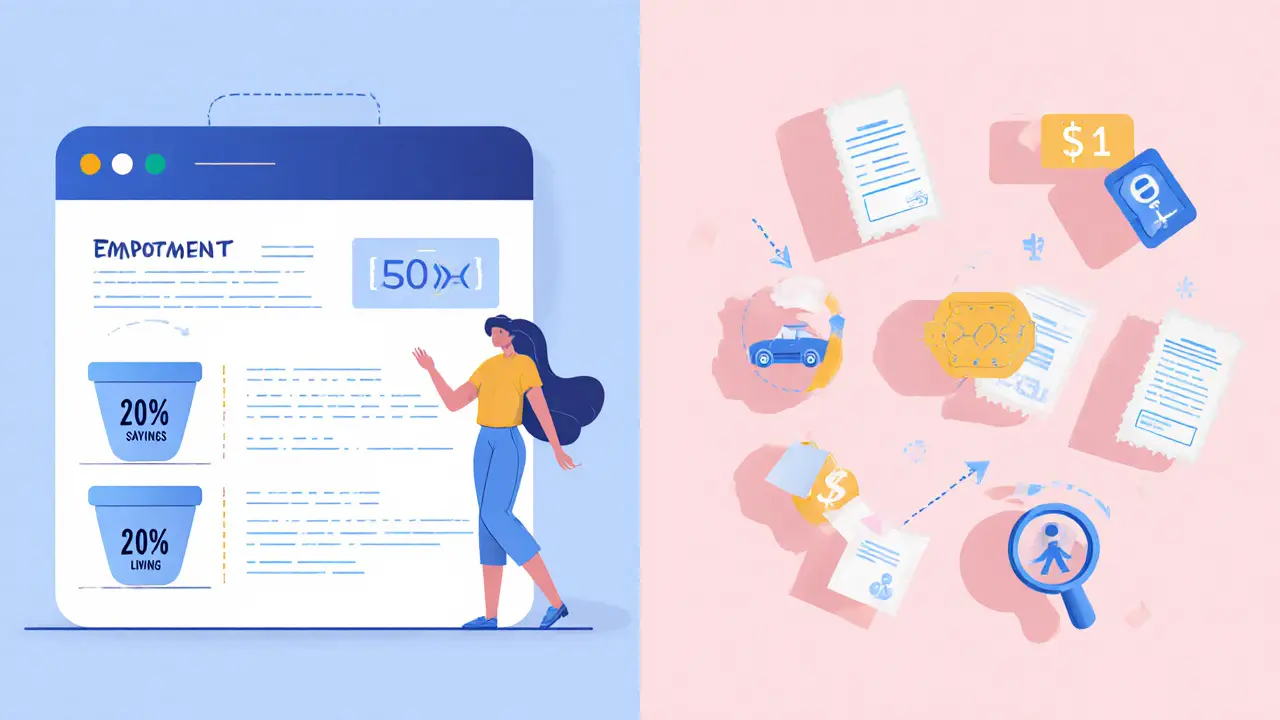
Open a separate bank account just for your escort income. Don’t mix it with your personal account. This isn’t about hiding money-it’s about clarity. When your rent, groceries, and therapy bills all come out of one pot, it’s easy to lose track of how much you’ve actually earned.Set up automatic transfers the moment you get paid. Move 30% straight into a savings account. That’s your emergency fund. Another 20% goes to taxes. The rest? That’s your living money. Use a digital bank like Monzo or Starling Bank-they let you label pots and set spending limits. You’ll know exactly how much you can afford to spend without risking your financial safety net.
Taxes Are Not Optional-They’re Your Shield
Many independent escorts assume they don’t need to pay tax because they’re “cash in hand.” That’s a dangerous myth. HMRC doesn’t care if you’re a hairdresser, a plumber, or an escort. If you’re earning over £1,000 a year in self-employment income, you must register as self-employed. Failure to do so can lead to fines, back taxes, and interest.Here’s what you can claim as expenses: car mileage (45p per mile for the first 10,000 miles), phone bills (proportion used for work), cleaning supplies, safety gear like alarms or lockboxes, professional photos, website hosting, and even therapy or counselling if it helps you manage work-related stress. Keep receipts-even digital ones. A photo of a receipt in your phone gallery counts.
File your Self Assessment tax return every year by January 31. Use GOV.UK’s free Self Assessment service or a simple tool like FreeAgent or TaxCalc. Don’t wait until April to start. Set a reminder for October 31 each year to review your income and expenses. That way, you’re never scrambling.
Build an Emergency Fund That Can Save Your Life
You don’t get sick days. You don’t get paid if you’re injured, sick, or if the police shut down a venue you usually work. That’s why your emergency fund isn’t a luxury-it’s your lifeline.Start with £500. That’s enough to cover a week’s rent if you can’t work. Then aim for £2,000-enough to cover two months of essentials. This isn’t about saving for a holiday. It’s about surviving the unexpected: a car breakdown, a medical appointment, a client who doesn’t pay, or a sudden lockdown.
Put this money in a separate account you can’t easily access. Use a savings account with no debit card linked. If you need to dip into it, make yourself wait 48 hours. That pause stops impulse spending and reminds you this fund is for survival, not convenience.
Plan for the Long Term-Even If It Feels Impossible
You might think retirement is a joke when you’re working 12-hour days and barely scraping by. But here’s the truth: the longer you work, the harder it gets. Physical strain, emotional toll, and societal stigma don’t disappear. Planning now gives you options later.Open a Self-Invested Personal Pension (SIPP) or a simple Stakeholder Pension. Even putting in £50 a month adds up. The government adds 20% tax relief automatically. That’s £62.50 in your pension for every £50 you pay. It’s free money you’re leaving on the table if you skip it.
Think about skills you can build now that will pay off later: writing, photography, social media management, counselling, or even teaching. These aren’t just side hustles-they’re exit ramps. Many escorts transition into running their own agencies, content creation, or advocacy work. The skills you’re developing now can become your next career.

Protect Yourself From Financial Abuse
Some escorts get pressured into sharing bank details with managers, partners, or “handlers.” Others are forced to hand over cash or sign over control of their earnings. This isn’t partnership-it’s exploitation.Your income is yours. No one else has the right to control it. If someone tells you to “trust them” with your money, walk away. If you’ve already given control to someone, get help. Organisations like The National Ugly Mugs Scheme or The English Collective of Prostitutes offer free legal advice and support for financial abuse.
Never let anyone else sign your name on documents. Never let anyone access your bank account without your explicit, written consent. If you’re unsure, ask a trusted friend to check your statements with you once a month. Accountability saves lives.
Know When to Ask for Help
You don’t have to figure this out alone. There are free, confidential services designed for sex workers in the UK. The Sex Workers’ Education and Advocacy Taskforce (SWEAT) offers financial workshops. The UK Network of Sex Work Projects connects you to local support groups. And organisations like Shakti and SWARM provide trauma-informed financial coaching.These aren’t charities asking for your pity. They’re tools built by people who’ve been where you are. Use them. Ask questions. Take notes. You’re not weak for needing help-you’re smart for seeking it.
Final Rule: Your Worth Isn’t Measured in Sessions
You’re not a transaction. You’re a person running a business. And like any business owner, your value isn’t in how many clients you see-it’s in how well you protect yourself, plan ahead, and grow beyond survival mode.When you start seeing your income as something to manage-not just spend-you begin to rebuild your power. You stop feeling like a victim of circumstance. You become the CEO of your own life.
Do I have to pay tax if I earn cash as an escort?
Yes. In the UK, you must report all income over £1,000 per year, regardless of how it’s paid. HMRC treats escorting as self-employment. Failing to report can lead to penalties, back taxes, and interest. Keep receipts and records-even for cash payments. Use GOV.UK’s Self Assessment portal to file annually.
Can I claim expenses like clothes and makeup?
Generally, no. Personal clothing and makeup aren’t deductible unless they’re a uniform or costume required for a specific role and not worn outside work. However, professional photography, website costs, safety equipment, and travel expenses (like mileage) are allowable. Always keep receipts and note the business purpose.
What’s the safest way to get paid as an independent escort?
Bank transfers or payment apps like Revolut or Wise are safest. Avoid cash when possible-it’s harder to track and leaves no record. If you must take cash, count it immediately in front of the client and confirm the amount aloud. Never accept cheques or third-party payments. Always use a separate bank account for work income.
How much should I save each month?
Aim for at least 30% of your income. Break it down: 20% for taxes, 10% for emergency savings. Once you hit £2,000 in savings, start contributing to a pension. This keeps you from living paycheck to paycheck and builds long-term security.
Can I get a mortgage as an independent escort?
Yes-but it’s harder. Most lenders require two years of tax returns and proof of stable income. If you’ve been filing your Self Assessment consistently and have good credit, some specialist lenders (like Kensington Mortgage or Coventry Building Society) will consider your application. Get a mortgage broker who understands self-employment in non-traditional sectors.
What should I do if a client doesn’t pay?
Don’t chase them yourself. Report the incident to a trusted peer or organisation like the National Ugly Mugs Scheme. Keep a record of the date, time, location, and any communication. If you use a screening service, alert them. Never risk your safety trying to recover money. Your safety is worth more than any single payment.