There’s no denying that Asian escorts appear frequently in global media, online ads, and even in casual conversations. But behind the surface-level fascination lies a complex mix of cultural myths, historical stereotypes, and real human experiences. Many people don’t realize how deeply these perceptions are rooted in colonial narratives, Hollywood portrayals, and decades of skewed media representation. What looks like simple attraction is often a distorted reflection of long-standing cultural biases.
Where Do These Stereotypes Come From?
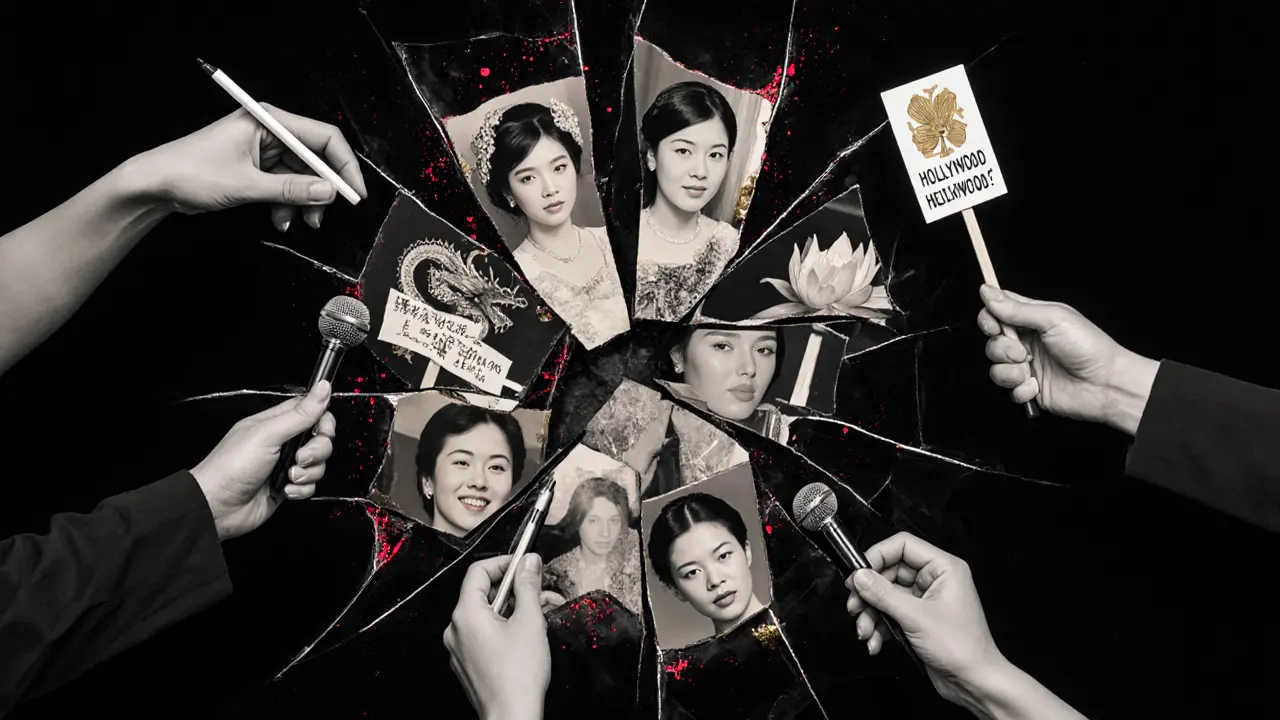
The idea that Asian women are naturally submissive, exotic, or endlessly obedient didn’t emerge from thin air. It traces back to 19th-century colonial writings that painted Asian women as passive objects of desire-figures to be controlled, admired, or consumed. These images were reinforced in 20th-century American films like Madame Butterfly and later in pornography, where Asian women were consistently cast as the "dragon lady" or the "lotus blossom." These roles weren’t just entertainment-they shaped how people saw real women from Asia.
Today, those stereotypes live on in search trends, dating app filters, and escort listings that use terms like "tiny," "submissive," or "traditional." They’re not describing personalities. They’re selling fantasies built on outdated, harmful tropes. Real Asian women aren’t a monolith. A woman from Seoul has different values, upbringing, and expectations than someone from Manila or Hanoi. But the market doesn’t care about nuance-it cares about what sells.
Why Do Some People Seek Asian Escorts?
People don’t choose Asian escorts because they’re looking for a specific nationality. They choose them because they believe they’re getting something else: compliance, silence, mystery, or the illusion of control. For some, it’s about escaping the emotional demands of Western relationships. For others, it’s about reinforcing a sense of superiority they don’t feel elsewhere. The appeal isn’t cultural-it’s psychological.
There’s also the role of isolation. Many men who seek out escort services, regardless of ethnicity, are lonely. They’ve struggled to build meaningful connections. When they see an escort profile that promises quiet companionship without conflict, it’s not the woman’s ethnicity that draws them-it’s the promise of an easy, predictable interaction. The "Asian" label just makes it feel more exotic, more different, more safe to fantasize about.
The Reality Behind the Marketing
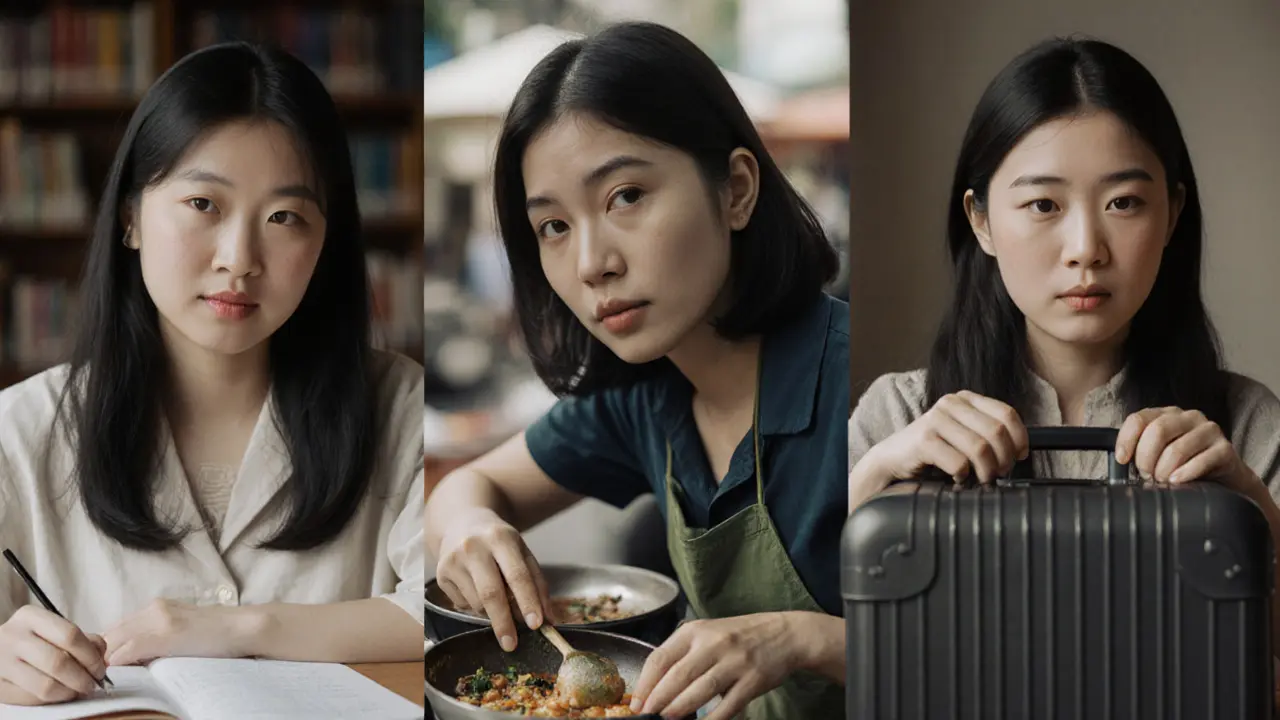
Behind every escort listing is a human being with a story. Some are students working to pay off debt. Others are survivors of trafficking or economic hardship. Many entered the industry because they had no other options, not because they were drawn to it. The cultural appeal sold to clients has little to do with who these women actually are.
One woman from Vietnam, who worked in Bangkok for two years before leaving the industry, told a researcher: "They call me sweet because I don’t yell. They think I’m shy because I don’t talk back. But I’m just tired. And scared. And I miss my family." Her story isn’t rare. It’s routine.
What’s rarely discussed is how these women navigate identity. Many learn to perform the role clients expect-smiling more, speaking less, dressing a certain way-not because it’s who they are, but because survival depends on it. The cultural appeal isn’t real. It’s a performance.
How Media and Technology Feed the Cycle
Online platforms have made it easier than ever to find escorts, but they’ve also made it easier to reinforce harmful stereotypes. Algorithms prioritize clicks, and clicks come from images and descriptions that match the most common fantasies. A profile with "Japanese girl, petite, obedient" gets more views than one that says "Thai woman, fluent in English, loves hiking and cooking." The system rewards stereotype, not substance.
Even dating apps contribute. Filters that let users search for "Asian women only" normalize racial preference as a personal taste. But preference isn’t neutral. When you filter out entire groups based on ethnicity, you’re not choosing a partner-you’re choosing a stereotype. And that’s not dating. It’s fetishization.
What’s worse is how these platforms shield themselves. Terms of service often ban explicit content, but allow vague descriptions like "exotic companion" or "oriental beauty." The language is coded, but the meaning is clear. The system profits from the fantasy while pretending it’s not involved.
The Human Cost of Cultural Fetishization
When culture becomes a commodity, people lose their humanity. Asian women who work in escort services are often treated as interchangeable parts in a fantasy machine. Their language skills, education, hobbies, and dreams are ignored. Their pain is invisible. Their agency is erased.
Studies from the University of California and the International Labour Organization show that women in sex work who are targeted because of their ethnicity report higher rates of verbal abuse, unsafe conditions, and emotional trauma. The "cultural appeal" doesn’t protect them-it makes them more vulnerable.
And yet, many of these women still find ways to reclaim their power. Some start blogs. Others create YouTube channels explaining their lives. A few have launched advocacy groups that help others leave the industry. Their voices aren’t loud in the mainstream, but they’re there. They’re real. And they’re fighting back.
Breaking the Cycle
Change doesn’t start with banning websites or arresting workers. It starts with questioning why we’re drawn to these fantasies in the first place. Why do we assume Asian women are quieter? Why do we think they’re more obedient? Why do we reduce entire continents to a single, sexualized image?
Education helps. So does exposure. Reading books by Asian authors, watching films made by Asian directors, listening to podcasts hosted by Asian women-all of these things chip away at the stereotype. The more we see Asian people as full humans-with humor, anger, ambition, and complexity-the less power the fantasy holds.
For those who’ve used escort services, the next step is simple: ask yourself why you chose that person. Was it because of who they are? Or because of what you wanted them to be?
The cultural appeal of Asian escorts isn’t about culture. It’s about control. It’s about projection. And it’s about avoiding the messy, unpredictable truth of human connection.
What Can You Do?
- Stop using racial filters on dating or escort apps.
- Challenge friends who make jokes about "Asian girls" or "Oriental beauties."
- Support organizations that help sex workers exit the industry.
- Read stories written by Asian women-not about them, but by them.
- Ask yourself: Am I seeing a person-or a stereotype?
The answer might be uncomfortable. But it’s necessary.
Why are Asian escorts so commonly advertised online?
They’re heavily advertised because online platforms profit from clicks, and ads that play into racial stereotypes-like "exotic," "submissive," or "traditional"-get more attention. These labels tap into long-standing cultural myths that have been reinforced by media and pornography for decades. The market rewards simplicity over truth, and stereotypes are simple.
Are all Asian women who work as escorts victims of trafficking?
No. While trafficking is a serious and widespread problem in the sex industry, many women enter this work voluntarily due to economic hardship, lack of opportunities, or personal choice. Assuming all are victims erases their agency and ignores their individual stories. It’s important to recognize both exploitation and autonomy without generalizing.
Is it wrong to be attracted to Asian women?
Attraction itself isn’t wrong. But when attraction is based on stereotypes-like assuming someone is quiet, obedient, or exotic because of their ethnicity-it becomes harmful. Real attraction is to a person, not a fantasy. If your interest is rooted in cultural clichés, it’s worth examining where those ideas came from and whether they’re fair to the individual.
Do Asian countries have laws against escort services?
Yes, most Asian countries have strict laws against prostitution and sex work, including escort services. In places like Japan, South Korea, Thailand, and the Philippines, while enforcement varies, selling sex is often illegal. Many women working in this industry are migrants or undocumented, which makes them even more vulnerable to exploitation and abuse.
How does this issue relate to broader racism?
The fetishization of Asian women is a form of racialized sexism. It reduces people to sexual objects based on their ethnicity, reinforcing the idea that they are not fully human. This pattern mirrors other forms of racism, like the hypersexualization of Black women or the emasculation of Asian men. All of these stereotypes serve to maintain power imbalances in society.